
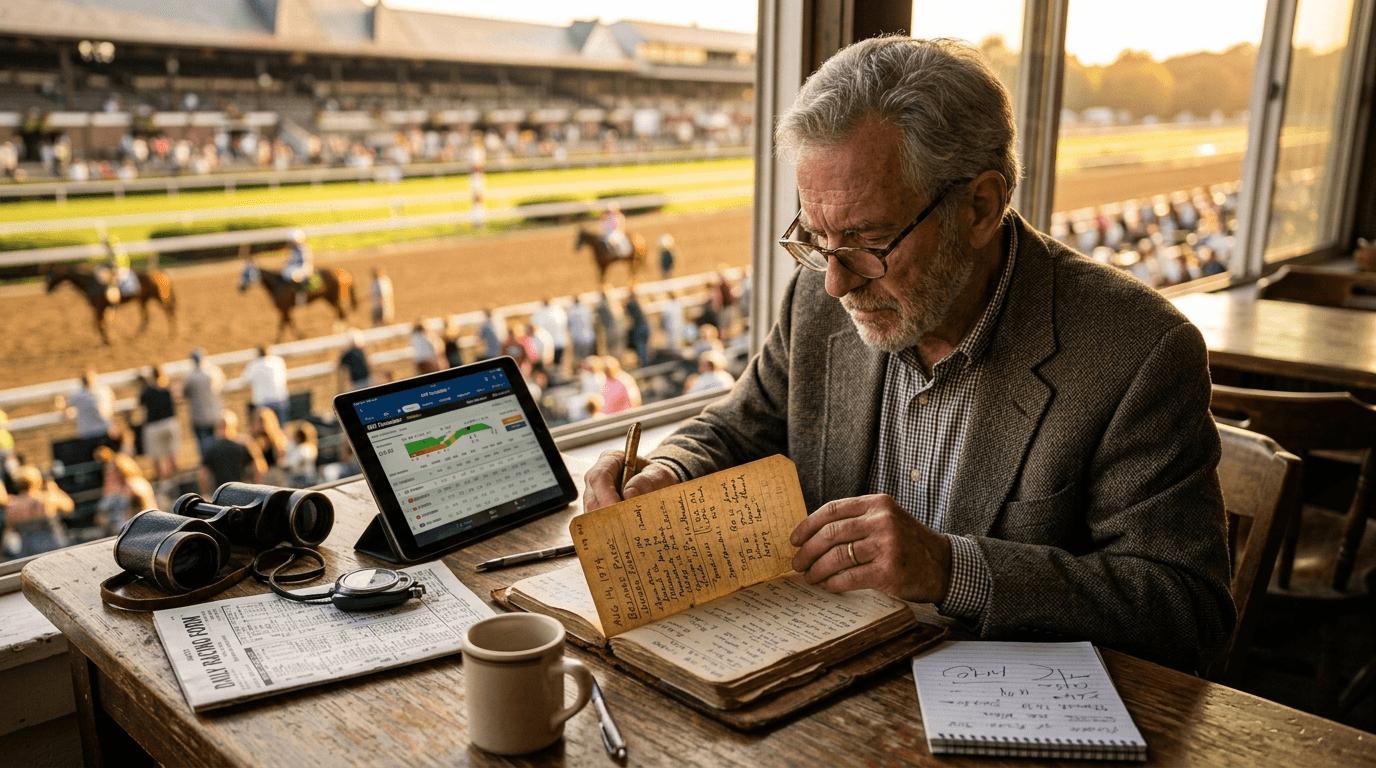
A horse-racing journalist needs more than a good writing style.
The sport contains a specialized language, complex statistics, detailed competition schedules and a large network of people whose decisions can affect what happens on the track. To report racing effectively, a journalist needs to understand the sport deeply enough to explain it to readers without losing the detail that makes the subject interesting.

The racing reporter therefore occupies a unique position between sport, data, people and media.
Knowing the sport
The first requirement is knowledge.
A racing reporter should understand the basic mechanics of a race: barriers, distances, track conditions, weights, race classifications, jockey tactics and the role of trainers.
But knowledge cannot stop there.
A journalist covering racing over a long period also develops an understanding of form patterns, breeding, race programming and stable preparation.
This expertise allows reporters to recognize why a particular event matters.
A novice may see an unexpected winner.
A specialist may understand that the horse had previously shown promise, had been suited by the distance or had improved significantly under a particular preparation.
That context becomes the foundation of useful reporting.
Research is part of the job
Much of racing journalism happens away from the racecourse.
Reporters research previous results, performance records, interviews, race histories and background information.
For major races, the research process can become extensive.
A journalist may examine previous editions of an event, investigate the records of leading trainers and jockeys, study historical performances and speak to sources familiar with the runners.
This preparation means the journalist can recognize a story when it happens.
Without research, a reporter sees an isolated event.
With research, the reporter can place the event in a larger story.
Building relationships
Horse racing is built around relationships, and so is racing journalism.
Reporters often develop professional contacts among trainers, jockeys, stable staff, owners, race officials, breeders and media representatives.
These relationships can help journalists understand developments before they become widely reported.
But access also comes with responsibility.
A journalist should distinguish between information that has been confirmed and information that has merely been suggested by a source.
Good reporting depends on maintaining trust without sacrificing editorial independence.
Understanding interviews
Interviewing is one of the most valuable skills in racing journalism.
A weak interview asks predictable questions and produces predictable answers.

A stronger interview searches for explanation.
Instead of simply asking a winning jockey whether they are happy with the result, a reporter might ask about the race position, the horse’s response in the straight, the decision to move at a particular point or what the performance means for the horse’s next campaign.
The goal is to create information that the audience did not already know.
Reading the race beyond the result
Official results are essential, but they are only the starting point.
A race can contain details that do not appear in the finishing order.
A horse may have had difficulty obtaining clear running. Another may have travelled wide. A jockey may have changed tactics because of the pace.
These details can become important when the horse races again.
The racing reporter must therefore pay attention to the race itself rather than simply copying the official result.
This is one reason experienced racing journalists are valued by readers. They can help explain what the numbers alone cannot.
Working with data
Modern racing journalism increasingly intersects with data journalism.
Results databases can contain enormous amounts of information. Journalists may use statistics to identify trends, compare performances and provide evidence for an article.
Data might show how a jockey has performed at a particular track, how a trainer’s runners have performed over a certain distance or how a horse’s record has developed over time.
The challenge is knowing when statistics add meaning and when they merely add clutter.
Good data journalism makes complicated information easier to understand.
Writing under pressure
Racing journalists regularly work under tight deadlines.
A major race may finish only minutes before a publication deadline, especially for digital outlets trying to publish immediately.
The reporter has to write quickly without losing accuracy.
That requires structure.
The result should be established early. Important details should follow. Quotes and analysis should provide context. Less important background can be added later.
The ability to prioritize information is just as important as the ability to write.
Understanding the audience
Not every racing reader wants the same thing.
Some audiences are experienced followers who understand specialized terminology. Others may have discovered racing recently and need more explanation.
A specialist publication has to decide where to sit between those groups.
The best journalism often manages to serve both.
A knowledgeable reader should find useful detail, while a less experienced reader should still understand the central story.
This is why clarity matters.
Technical language should inform rather than exclude.
Technology has expanded the reporter’s role
Today’s racing journalist can work with far more tools than earlier generations.
A smartphone can record an interview. A digital camera can produce images instantly. Online databases provide historical information. Video platforms allow immediate publication.
Social media also allows reporters to communicate directly with audiences.
This can make the journalist more visible, but it also creates new pressure.
The temptation to publish immediately must be balanced against the need to confirm information.
The reporter as storyteller
Ultimately, specialist knowledge only becomes valuable when it can be turned into a story.
Readers remember moments, characters and explanations.
They remember the horse that overcame adversity, the jockey who produced a daring ride, the trainer who waited years for a major victory or the unexpected result that changed a campaign.
The racing reporter connects those moments to the wider history of the sport.
That is why specialist racing journalism continues to have value even as the media industry changes.
The technology can change.
The publishing platform can change.
But the need for knowledgeable people who can watch racing, understand it and explain it remains remarkably consistent.