

A horse-racing meeting can produce dozens of possible stories.
There may be a dramatic finish, a surprise winner, an impressive young jockey, a trainer celebrating a milestone, an unexpected track condition or an important announcement from a racing organization.
But a newspaper or website cannot place every event at the top of its homepage.

Editors therefore perform one of the most important jobs in racing journalism: deciding which developments deserve the audience’s attention.
The result is not simply a record of the day’s racing.
It is an editorial selection of what matters most.
Not every winner is the same story
Winning a race is obviously newsworthy, but the significance of a victory can vary enormously.
A routine win in a minor event may receive a short report.
A major victory at a prominent carnival may become the lead story of an entire publication.
Editors look for the larger meaning behind the result.
Was the horse expected to perform well?
Was the jockey returning from a long absence?
Did the trainer achieve a major career milestone?
Did the victory change the horse’s future campaign?
These questions determine whether a result becomes a simple report or a larger feature.
The human story
People often provide the strongest angle.
A horse does not exist in isolation. Behind every campaign are trainers, jockeys, owners, breeders, stable staff and racing professionals.
A major victory can therefore support several different stories.
The race report explains the performance.
The interview explores the decisions behind it.
A feature article can examine the journey that led to the victory.
An editor chooses among these approaches depending on the audience and the wider news agenda.
Unexpected events attract attention
Editors naturally pay attention to developments that challenge expectations.
An unexpected result may become more interesting precisely because it was not expected.
A young jockey defeating experienced competitors, an outsider performing strongly or a respected horse failing to deliver can generate discussion.
However, responsible journalism still requires proportion.
An unusual result should be placed in context rather than exaggerated simply because it is surprising.
This is where editorial judgment becomes important.
Major races receive more space
Race meetings are not all equal in media terms.
Major events tend to attract larger audiences, more participants and greater public interest.
Newspapers can therefore devote more pages, photographs and analysis to major racing carnivals.
Digital platforms may dedicate special sections or live coverage.
This creates a cycle.
More media attention produces more public visibility, while greater public interest generates more reasons for media organizations to continue extensive coverage.
Headlines shape the first impression
The headline is one of an editor’s most important tools.
It must tell the reader what happened while also communicating why the story deserves attention.
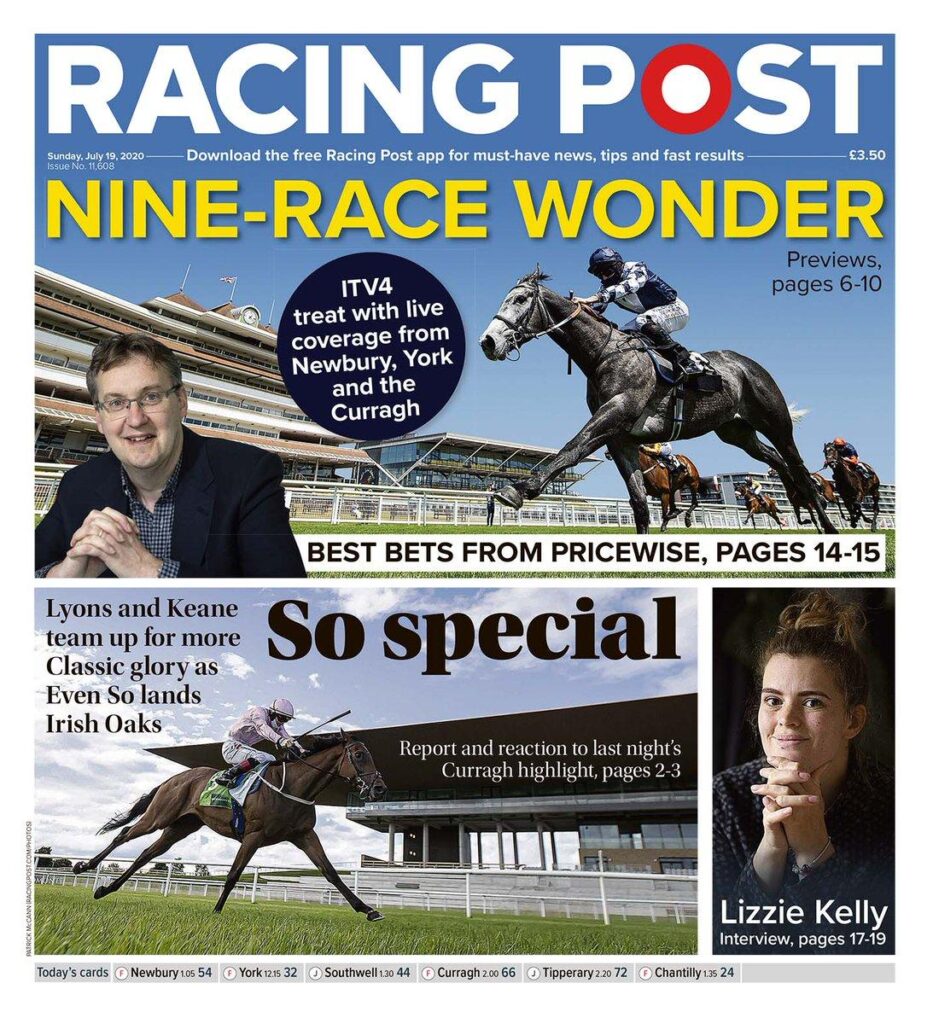
A weak headline may simply repeat the official result.
A stronger headline can emphasize the human or sporting significance.
The challenge is to attract attention without misrepresenting the article.
This is particularly important in digital media, where headlines compete for attention through search engines, social feeds and mobile notifications.
Images influence editorial decisions
Editors also think visually.
A dramatic photograph can elevate a story.
A major race with a strong finish-line image may become the lead item because the photograph immediately communicates the excitement of the event.
Another story may be important but visually limited.
Editorial decisions therefore involve words and images together.
The most successful digital racing pages often combine a clear headline with a compelling image and a concise explanation of why the story matters.
Different audiences want different coverage
A general sports reader may want a straightforward explanation of an important race.
A dedicated racing follower may want detailed discussion of tactics, form and future prospects.
Editors must understand who they are publishing for.
That does not mean simplifying every story.
Instead, publications can offer layers.
A short result may provide the basic information, while links lead readers toward detailed analysis, interviews and historical background.
Digital publishing makes this layered approach much easier.
Breaking news changes the newsroom
Sometimes a major racing story appears unexpectedly.
A late withdrawal, significant official announcement or incident can force editors to change the day’s coverage plan immediately.
Digital newsrooms have an advantage because they can publish quickly.
But speed also creates risk.
An incomplete report can be distributed widely before all the relevant facts are available.
Editors therefore need to balance urgency with verification.
The first article may be short.
Additional details can be added as information is confirmed.
The editorial narrative
Over time, newspapers and websites can build broader narratives around the sport.
A young jockey may become a recurring figure in coverage. A trainer may be followed through an entire carnival. A promising horse may be monitored from early performances to major races.

This continuity is important because readers do not experience racing as isolated events.
They follow careers.
Good editors recognize those continuing stories and connect individual race reports to them.
Why editorial judgment matters
Horse racing produces information.
Journalism determines how that information becomes public knowledge.
Editors decide what appears first, what receives the most space and which details deserve additional investigation.
This does not mean editors create the sport’s events.
They create the structure through which audiences encounter them.
That makes editorial judgment a crucial part of racing media.
The racecourse produces the action.
The newsroom decides how the audience will understand the story surrounding it.