
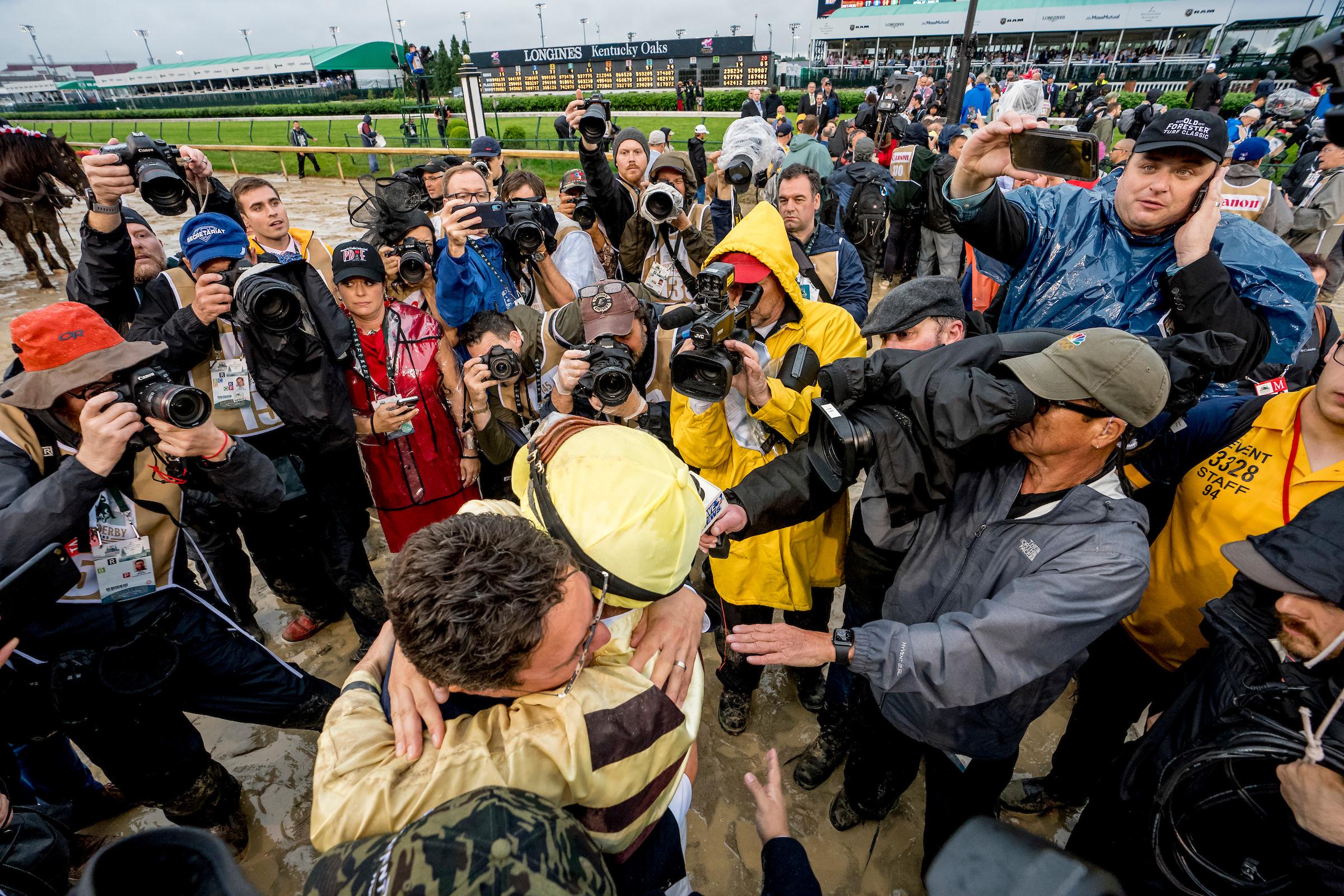
Horse racing is one of the most visually powerful sports in journalism.
The starting gates, the movement of the horses, the final sprint, the reaction of the crowd and the celebrations after victory all provide moments that can be communicated instantly through photography.
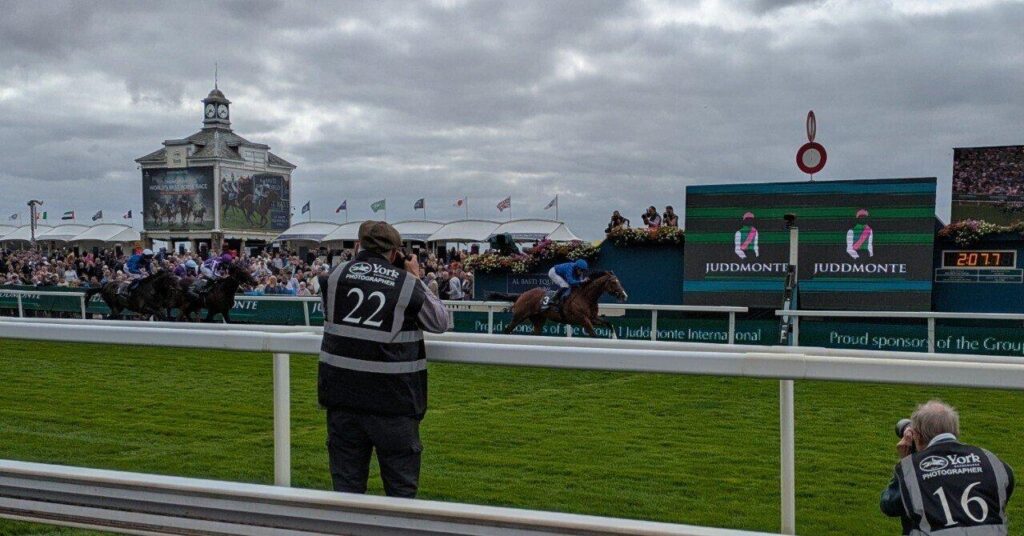
For newspapers and racing publications, photography is not simply decoration. It is part of the reporting process.
A strong image can communicate atmosphere, emotion and significance in a way that hundreds of words cannot.
The photographer’s race begins before the race
A racing photographer’s work starts long before the field reaches the track.
Photographers need to understand the event, identify important moments and decide where they need to be positioned.
At a major race meeting, there may be several simultaneous stories.
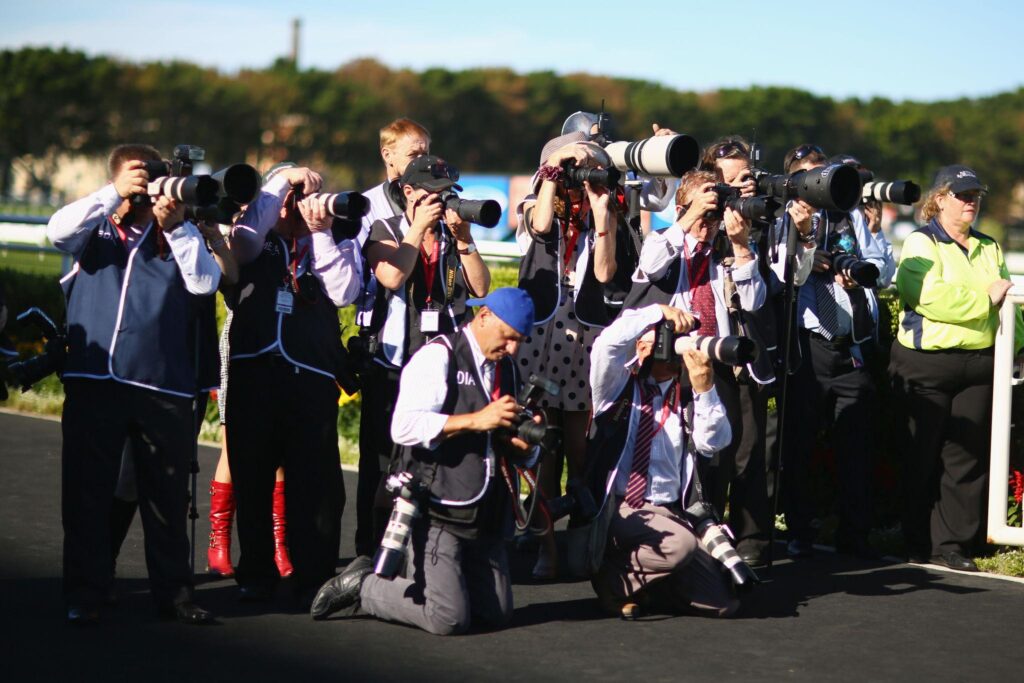
One photographer might focus on the feature race. Another may cover the mounting yard. Another may look for crowd and fashion images. Others may concentrate on winners, trainers, jockeys and owners.
The result is a visual record that extends far beyond the race itself.
Capturing the decisive moment
Horse racing moves quickly.
The moment a horse crosses the finish line can last only fractions of a second, yet photographs can preserve it indefinitely.
The best racing images often contain several stories at once.
They may show the winning horse, the jockey’s body position, nearby competitors and the reactions of the crowd.
Timing is critical.
A photograph taken moments too early may miss the decisive movement. A photograph taken moments too late may lose the emotional impact.
That is why sports photography requires both technical skill and anticipation.
Photography adds emotion to race reporting
A written article can explain who won.
A photograph can show what winning meant.
A jockey celebrating with a fist in the air, a trainer embracing stable staff or an owner reacting beside the presentation area can provide emotional context that is difficult to reproduce through text.
This is particularly important for major racing events.
A race may become part of a person’s career history, a stable’s long-term story or a racing club’s tradition.
Photography helps preserve those moments.
The ordinary moments matter too
Not every important racing photograph shows a winner.
Behind-the-scenes images can be equally valuable.
A groom preparing a horse, a trainer observing the track, jockeys walking toward the mounting yard or stable staff working before the meeting begins can reveal the human effort behind the spectacle.
These photographs are especially useful for feature articles because they introduce readers to the people who are rarely visible once the race begins.
They show that racing is an industry as well as a sporting event.
The newspaper’s visual language
Editors have always understood the power of a strong image.
A dramatic photograph can become the lead visual on a newspaper page or digital homepage. Another image may accompany an interview or feature story.
Online publications have even more possibilities.
A single event can generate a gallery containing dozens of images, allowing readers to experience the race meeting through multiple perspectives.
This changes the role of photography from supporting material to a major form of storytelling.
Photographers need racing knowledge
Good racing photography depends on more than camera skills.
Photographers benefit from understanding racing itself.
Knowing the likely position of the field, the shape of the track and where key moments tend to occur can help the photographer anticipate the action.
A photographer who understands the sport can also identify non-racing moments that may become important later.
That might include a veteran trainer watching a promising horse, a jockey preparing for a major ride or a famous owner arriving at the course.
Photography works best when technical ability is combined with subject knowledge.
From printed photograph to digital image
Technology has completely changed racing photography.
Traditional newspapers worked with physical negatives and printing processes. Modern digital publications can publish photographs almost immediately.
Images can be transmitted from the racecourse to editors while a meeting is still taking place.
Resolution and screen quality have also changed expectations.
Readers increasingly encounter racing images on large desktop displays, phones and social-media platforms. Cropping, composition and image selection therefore become important editorial decisions.
The photographer may capture hundreds of images, but only a handful become part of the final story.
The archive value of racing photography
One of the most important functions of racing photography is historical preservation.
Written records can tell us who won a race.
Photographs can show us what the racecourse looked like, what jockeys wore, how crowds behaved and who stood beside the winner.
Over decades, these images become an archive of racing culture.
They document changing fashions, facilities, technology and personalities.
A photograph of a famous victory may eventually become a historical image rather than simply a newspaper picture from one afternoon.
Photography in the social-media era
Digital platforms have made photographs even more valuable.
A dramatic racing image can attract attention quickly on social media and encourage readers to visit the full story.
This has also increased demand for visually interesting moments beyond the traditional finish-line shot.
Portraits, paddock images, crowd scenes, stable preparation and unusual race-day details can all become part of the media package.
The racecourse becomes a visual newsroom.
The photographer as a journalist
The most effective racing photographers are not simply recording events. They are selecting moments that help audiences understand the event.
That is journalism.
The lens can reveal speed, tension, disappointment, celebration and human effort.
For newspapers and digital racing publishers, photography ensures that important moments survive beyond race day.
The result is more than a collection of attractive images.
It is a visual history of the sport—one race, one person and one moment at a time.