

For decades, newspapers published horse-racing results in tightly organized tables.
Readers could scan finishing positions, distances, jockeys, trainers and other information. At first glance, those tables might appear to be nothing more than reference material.

In reality, they were an early form of sports data journalism.
Today, digital platforms have taken that idea much further. Racing publications can combine historical results, statistical databases, performance records and live updates to create detailed stories based on data.
The numbers have become part of the journalism itself.
Why racing naturally produces data
Horse racing is unusually rich in measurable information.
Every race produces a result. Every runner has a performance history. Jockeys and trainers accumulate records. Racecourses have characteristics that can be studied over time.
Distances, weights, barriers, finishing positions and race conditions all create information that can be compared.
This makes racing particularly suitable for statistical analysis.
The journalist’s role is to determine which of those numbers are meaningful.
The old newspaper results page
Traditional racing pages often contained extensive results information.
Readers could study previous performances and compare runners before making their own assessment of a race.
That information also gave the sport a historical memory.
A horse’s previous results were no longer isolated moments. They became part of an ongoing record.
Today’s digital databases continue that tradition, but with dramatically more capacity.
Information that once occupied several printed pages can now be searched, sorted and compared almost instantly.
Turning statistics into a story
Data alone does not automatically make journalism.
A list of statistics can be difficult to understand unless the journalist identifies a meaningful pattern.
For example, a reporter might examine how a trainer’s runners have performed during a particular racing carnival or how a jockey has performed at a certain track.
The result could form the basis of a feature article.
The important point is not simply the number.
It is what the number reveals about the story.
Good data journalism answers a question.
Historical comparisons
Racing history is particularly useful for statistical storytelling.
A journalist can compare modern performances with earlier editions of major races, examine winning trends or investigate how racing styles have changed over time.
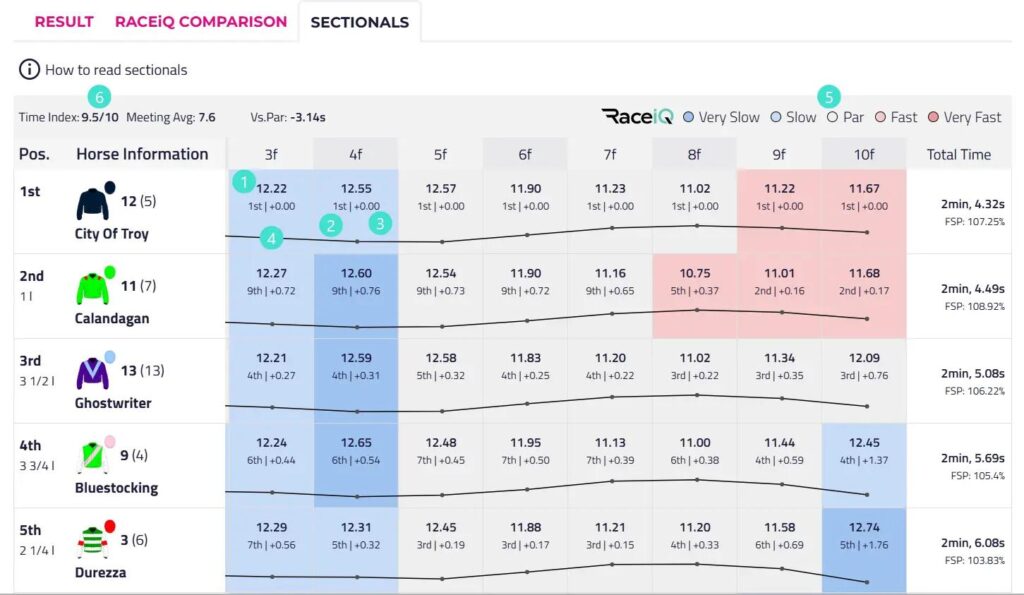
Historical comparisons can turn a routine result into something more significant.
A victory may become notable because it continues a long sequence, breaks a previous pattern or represents a milestone for a trainer or jockey.
The database becomes a research tool.
Data can reveal the hidden story
One of the strengths of data journalism is its ability to highlight patterns that are difficult to see during a live race.
A journalist watching one afternoon sees one performance.
A database containing years of results can reveal much broader trends.
Perhaps certain race conditions repeatedly produce similar outcomes. Perhaps particular runners perform differently across tracks or distances.
These patterns can encourage deeper reporting.
The journalist can then contact experts and ask why the pattern may exist.
The result is a combination of statistics and human explanation.
Accuracy becomes more important
The greater the reliance on data, the greater the need for accuracy.
A single incorrect number can undermine an article.
Journalists need to confirm records, identify the correct race and ensure that comparisons use equivalent categories.
This is particularly important when dealing with historical statistics.
Data journalism looks authoritative because numbers appear objective.
But numbers can still be misunderstood, selected poorly or presented without sufficient context.
The responsibility of the journalist is to explain what the data actually shows.
Visualization changes the reader experience
Digital media has also changed how racing information can be presented.
Instead of long printed tables, readers can encounter interactive charts, searchable race records and visual comparisons.
A publication could show a jockey’s performances across a season or illustrate the development of a horse’s record over time.
These tools make complex information easier to explore.
They also allow readers to investigate the subject themselves rather than simply accepting a written conclusion.
Data and the modern newsroom
Data journalism has changed the skills required in racing media.
Reporters increasingly need to understand spreadsheets, databases and basic statistical reasoning alongside traditional writing and interviewing.
This does not mean every racing journalist has to become a data scientist.
It does mean that the ability to work comfortably with structured information is becoming more useful.
The strongest stories can combine data with reporting.
A statistic can identify the question.
An interview can help explain it.
An on-course observation can provide another layer.
The audience is becoming more data-aware
Modern racing audiences are exposed to statistics across many platforms.

Digital racecards, historical records, analytical tools and live updates have increased the amount of information available to readers.
This has changed expectations.
Readers may notice when an article lacks context or when a statistic appears questionable.
At the same time, there is still a place for journalism that simplifies complicated information.
A good article does not overwhelm readers with numbers.
It selects the numbers that matter.
The future of racing data journalism
As digital technology develops, racing publications will have access to even more information.
The challenge will not be finding data.
It will be deciding which data deserves attention.
Journalists will continue to play an important role because audiences need help turning enormous amounts of information into meaningful stories.
The newspaper results table has evolved into searchable databases, live statistics and interactive analysis.
What appears on a racing website today may look completely different from the printed racing page of earlier generations.
Yet the objective is remarkably similar:
Give the audience reliable information, place it in context and help readers understand what happened on the track.